
Away Game: Students Who Play Sports for Other Schools
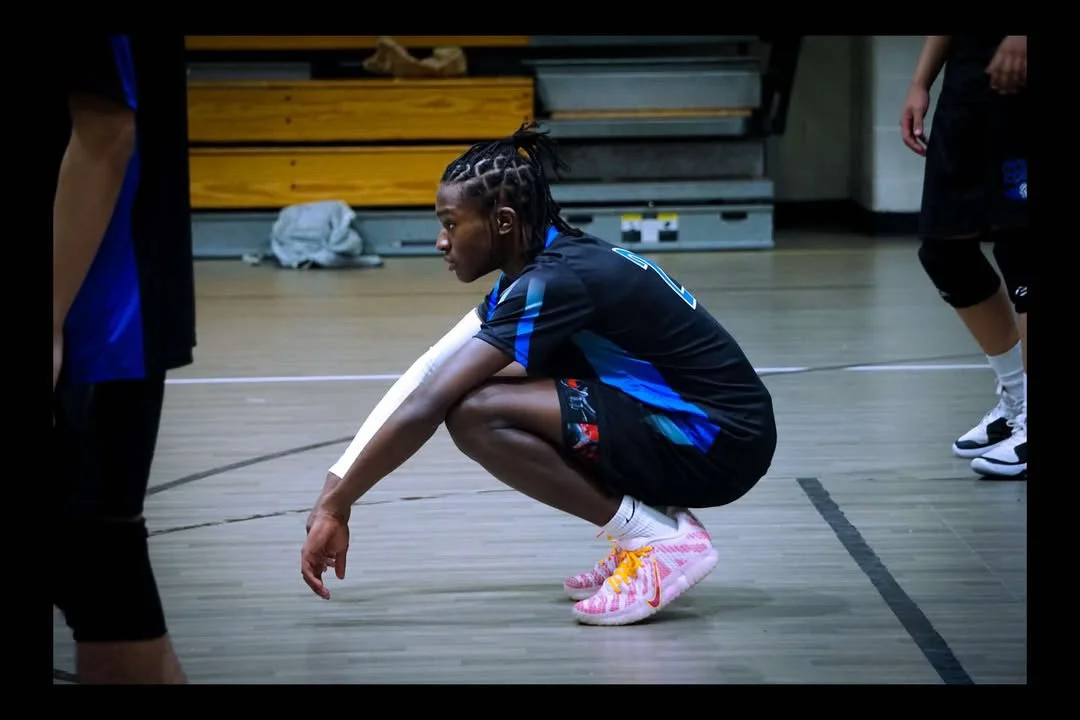
Noah Moore, a senior at the High School of Art and Design, played football for Stuyvesant through a Public School Athletic League program. Photo by Sadie Gonzalez
What if your high school doesn’t offer your favorite sport?
Today’s disparities in access to sports teams stem from a policy pushed by former Mayor Michael Bloomberg to replace large high schools with smaller ones. These new schools, largely serving Black and Latino students, didn't have the enrollment to field an array of teams — creating a systemic deficit that still disproportionately affects students of color.
As part of a 2022 settlement of a class action lawsuit arguing that the Public Schools Athletic League, or PSAL, and the Education Department were discriminating against Black and Latino students, the city created the PSAL All-Access Program. Through “Individual Access,” students who want to play a sport their school doesn’t offer can join a nearby school’s team. Roughly 1,500 students participated on teams through the program in the 2023-24 school year, Education Department officials previously said.
Still, just 38% of Black and Latino students went to a school with 20 or more teams, compared to 61% of students who are white, Asian American, multiracial, or belong to other groups, one sports equity advocate found.
P.S. Weekly producers Jasper Mallorca and Roberto Bailey discuss the landscape of high school sports access in New York City schools. Mallorca interviews Noah Moore about what it’s like to be on another school’s team. Moore, a senior at Manhattan’s High School of Art and Design, played football for Stuyvesant High School. Mallorca, also an Art and Design senior, ran cross country for a team based at Lab Collaborative and the Museum School.
Their experiences offer a window into the city's patchwork sports-access fix — and its limitations.
P.S. Weekly is a collaboration between Chalkbeat and The Bell. It’s available on major podcast platforms, including Apple Podcasts and Spotify. Reach us at PSWeekly@chalkbeat.org. New episodes drop on Thursdays.
P.S. Weekly is made possible by generous support from The Pinkerton Foundation.
News Clip: There's been so much drama going around the PSAL playoffs and student athlete eligibility
News Clip: Now again, PSAL, you're underfunded, you're understaffed. Maybe you don't have the people who can do this.
David Garcia-Rosen: Then there's 17,000 who have access to nothing at all, which doesn't even account for the tens of thousands that maybe have one bowling team at their school, or have a basketball team, but nothing else.
David Garcia-Rosen: The historic class action lawsuit against the New York City Department of Education, alleging that they're violating New York City's very own human rights law by not providing Black and Latino students with equal access to the public school athletically.
News Clip: Let them play. Let them play. Let them play. Let them play.
Jasper: Sports are the heart of the city in New York. There aren't many places where you can go to a random park and play basketball with a bunch of new people with the same intent: to win the game. But sports in New York City aren't all about winning. In fact, most of the pro teams don't win that often.
They're more about a culture that reflects the hustle and community of the city, which is why some people might be surprised to learn that access to school sports here in the city is actually pretty limited. The nation's largest school system was sued over systemically denying students access to sports.
The DOE has responded by agreeing to some changes to expand access. Today, we take a close look at one of those changes to see how it's working out.
Jasper: This is PS Weekly, the sound of the New York City school system. I'm Jasper Mallorca, a senior at the High School of Art and Design.
Roberto: And I'm Roberto Bailey, a senior at Hunter College High School.
Jasper: Roberto, do you like sports?
Roberto: Yeah, I mean, I feel like I'm definitely a casual fan, but still a fan.
Jasper: Oh, what would you say is, like, your favorite?
Roberto: Oh, that's hard. I really like to watch college basketball. I watch it with my dad, especially, like, during March Madness. He went to UVA, so he's, like, super into it. So I would say basketball is probably my favorite.
Jasper: Basketball is, out of all the sports, it's like an art form. It's like the dribbling, it allows you to improvise in the same way like if you're playing jazz music or if you're, like, sketching in your notebook or something.
But definitely, like, my favorite sport to play is cross country, because I've been running on all my school teams since the third grade.
Roberto: So you're on your high school team now?
Jasper: I'm actually not. Like, I go to an art school, so there isn't that strong of a sports culture. Not a lot of people would want to join, and there's not enough staff that would do it.
So I actually can't really run my school, unfortunately.
Roberto: If your school did have a team, would you want to be on it?
Jasper: 100%, 'cause it's like, I already love my school, so I want, I wanna have that personal bias on my back, and I feel like I'd be playing with a lot more heart thinking about my school, like all my friends, and just that community while I'm playing.
I think it would be more inspiring.
Roberto: So, what did you end up doing? Like, did you have to just give up running completely?
Jasper: I mean, I actually didn't have to give up running, 'cause the PSAL All Access Program came in clutch, so...
Roberto: I've never heard about that before. So what's the All Access Program?
Jasper: Well, it's kinda within the PSAL, and the PSAL stands for Public School Athletic League.
It was made, like, a really long time ago, in like 1903. It's basically the main sports league for all the public schools in New York City. 400 schools are in it, and 45,000 students play across 25 varsity sports. But the All Access Program was made because, despite its size, many New York City public schools still don't offer enough sports, and looking at what schools don't have access to revealed deeper inequity issues.
Chalkbeat reported that in 2024, just 38% of Black and Hispanic students go to a school with 20 or more teams, compared to 61% of students who are white, Asian, multiracial, or belong to other groups.
Roberto: So, how did this program get created?
Jasper: Well, in 2018, there was a class action lawsuit that argued the DOE and PSAL were discriminating against Black and Latino students by not giving them the same access to sports.
The suit highlighted that access to sports is essential for helping students maintain mental and physical health, and necessary for access to community building, teamwork skills, and college opportunities. So it wasn't fair that Black and Latino students couldn't have access to a diversity of athletic opportunities.
In 2022, the lawsuit was settled, and that's what created the All Access Program, which lets students join sports teams at other schools if their own didn't offer what they wanted to play.
Roberto: And how exactly does it work?
Jasper: So, like, in my case, like, my school didn't offer cross country, so in the PSAL All Access Program, there's, like, four different types of programs.
But the one, like, a lot of people could use to join teams around them is the Individual Access Program, where you could basically join another school and try out there, like, where it geographically works. So for me, I ran as a Gator at the Lab Museum School.
Roberto: Do a lot of kids end up, like, having to do this?
Jasper: According to the DOE, about 1,500 students participated in the Individual Access Program for 2023 to '24 school year. But in my experience, this program isn't advertised a lot, so a lot of students who could have benefited from the program didn't actually really know about it.
Roberto: Yeah. And I feel like beyond that, it must just be weird in general, like, for these students showing up at a school where you don't really know anyone and kind of just being like, "Hey, I'm on your team now."
Like, what is that like?
Jasper: Yeah, it's, it's definitely, like, pretty awkward 'cause it's like they see you show up and, you know, you don't go to the same school. So beyond knowing them as, like, a teammate, you're learning about them basically as if you're going to a new school where everyone already knows each other.
Roberto: Yeah. So are you the only kind of student at your school who's been dealing with this, like, trying to balance the art side of things and the sports side of things?
Jasper: Definitely not. Actually, I think there's someone I know we could talk to. A friend of mine, Noah Moore, is a fellow senior at Art and Design. He plays basketball and volleyball on our school team, but thanks to the PSAL All-Access Individual program and the fact that our school doesn't have a football team, Noah travels from our school at East 56th Street all the way down to Tribeca to play on another school's team.
Jasper: So you said you, like, played football at, like, another school, right?
Noah: Yeah. I played at Stuyvesant.
Jasper: Mm-hmm. What made you, like, wanna play football?
Noah: So at our school, I've been on, like, the basketball team and the volleyball team, but this year I also decided to play football at Stuyvesant. But that all came because last year, one of the players on the basketball team at our school, he's not a basketball player.
He's more of a football player, and he, I guess he inquired about playing football because our school doesn't have a football team. But certain schools are, like, allowed to accept other students from other schools to play sports at their school if your school doesn't have it. 'Cause I feel like you did the same thing, no?
Jasper: Yeah, I did with cross country.
Noah: Right. So he wanted to play football, so they referred him to Stuyvesant, and he was telling me last year, he said his team needed receivers, and I was like, because I also tried volleyball that year, I was just like, "Ah, what the heck. I'm in the mood of trying things, so why not?"
Jasper: Did you decide Stuyvesant, or was it, like, a-
Noah: No, I don't get to dec- y- I don't think you get to decide the school that you... I mean, for me, it was because I was following the kid who comes to our school, he, who wanted to play football. I don't know if he got to choose which school he, um, wanted to go to. But did you get to choose for cross country, or did they just put you in a school?
Jasper: Nah, they just, they put me there. I wanted to, like, run cross country, 'cause that's what I've been doing forever.
Noah: Oh, really?
Jasper: Yeah, like, since, like, second grade or whatever.
Noah: Oh, shoot. I didn't even know that.
Jasper: Yeah, and I don't know. That's another thing, bro. Art and Design, like, somehow doesn't have a running team, so–
Noah: Running's very easy to do. You really just put one foot in front of the other quickly, but-
Jasper: That's why I was surprised, though. I thought they would have, like, some sort of thing.
Noah: But at the same time, I think you need to have, like, a certain number of people on your roster, and I think if you can't get that many people to sign up, then you can't have a team.
'Cause for our girls' basketball team, I think every year since freshman year, I feel like I've seen less and less people come to tryouts. So then it's like, you don't have much of a team, and if one person's missing, then you have to forfeit a game. So I think the fact that we don't have that many people trying out is also a, a little bit of an issue.
Jasper: Mm-hmm.
Jasper: How, what was, like, the difference? Like, was the, was the tryouts really busy in Stuyvesant? Like, could you tell they were taking it serious?
Noah: Oh, for sure, but that's also because you have so many people coming from so many different schools. 'Cause it was only me and Jared coming from Art and Design, but you had people from Murry Bergtraum, Graphics, all these other schools, from, like, basically any school, like, from 56th Street, I think, and below, that didn't have a football team. If you wanted to play football, I think they would refer you to Stuyvesant. And so we had a large number of people all trying to play for this football team, but there's only but so many positions, so everything is, like, a battle, 'cause you know you have, like, four or five other people who want your spot.
You know, it's like an iron sharpens iron kind of situation, so you're forced to get better whether you like it or not.
Jasper: What was your commute like?
Noah: Well, for me and Jared, they would expect us to get there a little late because we're coming from an art school. And then once... And practice, depending on how well it goes, could go from, like, 3:00 to 5:00. But also, Pier 40 is a public field, so oftentimes we'd get kicked off by, like, a soccer program that has, like, the permit for the field.
But if they didn't come, practice would r- run longer than it was supposed to. So then I'm not finishing practice till, like, 6:30. Then I have to hop back on the train to go home with, like, my football equipment in one hand, a heavy behind book bag.
Jasper: Do you ever have, like, to deal with, like, mentality shifts? 'Cause I know, like, you know, we're all familiar in art and design, like, you have all your friends and you have, like, an attachment to it. But, like, how'd it feel having to, like, kinda go from that to, like, a whole nother, like, environment and another school? Did you ever, like, go around there kinda missing art and design in a way? Like-
Noah: For sure, 'cause I went... Like, when I would go to practice, like, the culture, not even, like, winning culture or anything, just, like, especially at a school like Stuyvesant, it's a very different demographic. So oftentimes, like, I'd be at practice, and I'm sitting there, like, twiddling my thumbs, 'cause I'm also not too, too much of a social person, so I'm not gonna go out of my way to, like, go make a bunch of new friends there.
But especially because people are coming from different schools and they're kind of coming together, people surround themselves with the people from their school. But it's only me and one other person. So if he's out on the field practicing and I'm, like, sitting there 'cause it's not, like, a formation that I'm in, then I'm just sitting there, like, waiting, and I'm just killing time.
So I'm like, "Dang, I wish, like, I actually had people that I knew here that I could talk to," 'cause, you know, makes the time go by faster.
Jasper: Going to, like, the new school, do you remember, like, the first day where you got there, you're like, "I don't know any of these people"? And, like, what did your mind ... Like, what did you wanna do about it, kinda?
Noah: I remember the first day I walked in with Jared and his friend, I guess, who I assume invited him to the team maybe. I said what's up to him, and then I met the coaches. I said hi, and then I threw my cleats on, and we started running practice. And so when I ran my first route, I'm running at 100% effort, and I'm a fast person, so my coaches started to, to realize that too.
But after a while, you start to meet a couple people, and you're like, "Oh," like, "I'm friends with these people. I'm fr- I'm not friends with these people." And you find your s- place after a while. They definitely surround themselves with each other. So if you're an outsider coming in, unless you're doing something incredible for their team, nine times out of 10 you just fly under the radar.
Jasper: I think that's another ... Like, people forget. Like, they think it's kinda easy to, like, go to a new school, like, for the PSAL thing. But, like-
Noah: How was it for you?
Jasper: Low-key it was- it wasn't terrible, but I feel like people kind of forget the whole social aspect of, like, having to go to all these people, like, unfamiliar. You know what I'm trying to say?
Noah: Yeah.
Jasper: 'Cause I remember, like, I got there, me and Emilio were actually on the same team.
Noah: Yeah.
Jasper: But, like, when Emilio got injured, I was like, "What am I doing here?" So I had to, like, kinda ... I know I slowly kinda made some friends, but, like, it's not the same as, like, being in Art and Design, you know what I mean?
Noah: Literally the other day they had a banquet for the Stuyvesant team, the football team. And, like, they ... I would've ... If I went, I w- there was free food. I think they, they were giving out awards and all this other stuff. But at the same time, I had a birthday party that I promised I was going to, like, months before they even invited me.
But then at the same time, it was like, I'm not exactly upset that I missed it, 'cause at the same time, I don't talk to half those people. So if I showed up, I would've been catching up with people. But they were, like, cool for when I... And there was def- there's definitely close friends I've made, but for the most part, most of them, it's just like we were teammates, and I respected you as a teammate, but I know deep down I'm, I'm not your friend, which is okay, 'cause f- I don't have to be everybody's friend.
But going to a new school, you definitely get that feeling of being an outsider is a struggle in itself.
Jasper: How important do you think, like, being on a sports team... 'Cause at least for me, like, I have fun doing my sport, but, like, that, I also wanna, like, have fun with the, the team. Like- Yeah ... how important do you think it is to, like, be able to go to practice and be, like, smiling to see everyone? You know what I mean? 'Cause don't you think that makes the sport more fun, too?
Noah: It definitely makes the sport more fun, and especially if you're, if everybody's having fun, it unites people, so then you start building those bonds, 'cause you're sitting there smiling, you're laughing with other people, you're joking with other people, and you really start to form a bond between teammates.
'Cause once the fun aspect is gone, you really don't wanna be there anymore, and so then you stop trying, 'cause you're just like, "I wanna get through practice to go home."
Jasper: Are there other sports you would've wanted to play if you knew you could play at another school?
Noah: I always wanted to, like, explore track, and I just never did it, 'cause I didn't know that was a thing that we could...I didn't know we could play sports at another school. I mean, they'll make an announcement every now and again, but it's not, like, pushed for you to be like- They don't, yeah ... oh, go play at a different school. So-
Jasper: You have to, like, figure it out on your own.
Noah: Yeah. So there's def- there's a small number of people who will, like...Like, I know there's a person who does swimming at another school. You guys do cross country. I did football. I don't know what other sports people play at different schools, but they definitely don't push it. So track would probably be one of the ones that I would've done that I never got the, uh, opportunity to, because I never knew about it.
Jasper: Yeah, definitely.
Noah: What about you?
Jasper: Let me think. Um, low-key, like, I mean, the only other sports I would, would've wanted to play, they already offer, so. Oh, like basketball? Yeah, but like, I'm not making that You could've. Yeah. Like, I should've. I, for, low-key, I regret not trying out this year, 'cause this is my prime, but whatever. That's a whole other thing.
So you know how, like, when we're doing the high school process, we didn't really think about a lot of the things we... You know, you probably like thought like, "Oh, I kinda wanna do some art," but, like, do you have, like, any regrets at all? Because I know, like, Art and Design's not s- centered towards sports, and you're like a s- more of a sports-centered person.
So, like, do you think you have a regret about Art and Design?
Noah: I remember there was two moments where I thought, like, oh, I should've gone somewhere else. Number one being when we played Philip Randolph and they told me, "Leave the school." Then I was like, huh, what would've happened had I not chosen to go to an art school?
I think had I gone to, like, an actual sports-related school, I probably would've gotten a lot better 'cause you're surrounded by different coaches or competition that's gonna teach you, like, you're gonna grow. Stuyvesant, I've made graphics for them, and they'll post them on their official page. So I'm not upset at the fact that I came to art school 'cause I definitely appreciate all the artistic opportunities we've been given.
But I know if I went to another school, I probably would've been a better athlete, but you know, maybe that's just not my journey. That's what my dad always likes to say. Everybody's journeys is, uh, journey is different, so maybe this is just the way mine was supposed to go.
Jasper: All right. Lowkey, I, I love how that ended.
Noah: Thank you for inviting me. This was cool.
Jasper: Thank you, Noah Moore, for joining us today.
Noah: Of course. Anytime.
Jasper: Noah went to great lengths to play a sport, and I totally get it. I mean, I love cross country, and I just wanted to have another opportunity to play it, so having the PSAL Access Program to play, even though it was pretty hard, just like Noah said, like, meeting new people, kinda competing for the same spots as them, and how it felt like you're kinda going to a new school where everyone knows each other, it was definitely hard, but it was definitely worth it just 'cause I got to play the sport I loved.
Roberto: Yeah, I mean, I guess I didn't realize just how big of an issue this is. I've always kind of thought of sports as something schools might automatically have, and I think especially because my school, Hunter, does have over 30 teams and very, like, active recruitment from coaches to get people to play. Most of the people I've talked to haven't heard about this inequity or heard about the All-Access Program at all.
Jasper: Yeah. More people should definitely know about this. Like, there's a lot of people, like, in a lot of schools, including mine, like, that I know that were just, like, so into a sport, and there was literally no posters, nothing about, like, the PSAL All-Access Program, so a lot of these people couldn't even try it.
So, and especially 'cause, like, in high school, you wanna, like, explore new things. Like, you're young, you're still trying to learn about yourself and do new things. So for me, like, and other people at my school, like, who wanna be both artists and athletes, this, like, kinda gives an outlet, and even beyond just people at our school.
Like, this gives an outlet to people who've had maybe a long day in academics, and they can just go and play their favorite sport.
Roberto: Yeah, and beyond just you and Noah, it's kind of about this larger equity issue, right?
Jasper: Yeah, it's, it's definitely not just about, like, how much sports you have or anything, 'cause the PSAL All-Access Program is about allowing people to follow their dreams or simply even just having the access to trying new things.
Like, race and zip code shouldn't mean someone who wants to make the NBA can't even have that shot.
Roberto: The PSAL did not respond to our request for comment.
Jasper: That's all for today on P.S. Weekly.
Roberto: P.S. Weekly is a collaboration between The Bell and Chalkbeat, made possible by generous support from the Pinkerton Foundation.
Jasper: Producers for this episode were me, Jasper Mallorca.
Roberto: And me, Roberto Bailey.
Jasper: Our senior producer for the show is Maria Robins-Somerville, and our technical director is Jake Lummus.
Roberto: Executive editors are Amy Zimmer and Taylor McGraw. Additional production and reporting support was provided by Mira Gordon, Sabrina DuQuesnay, Zana Halili, and Katelyn Melville, and our friends at Chalkbeat.
Roberto: Music is from APM, and the jingle you just heard at the beginning of the episode was created by the one and only Erica Huang.
Thanks so much for tuning in, and see you next time.
