Inside the Diversity Program at One Selective NYC High School
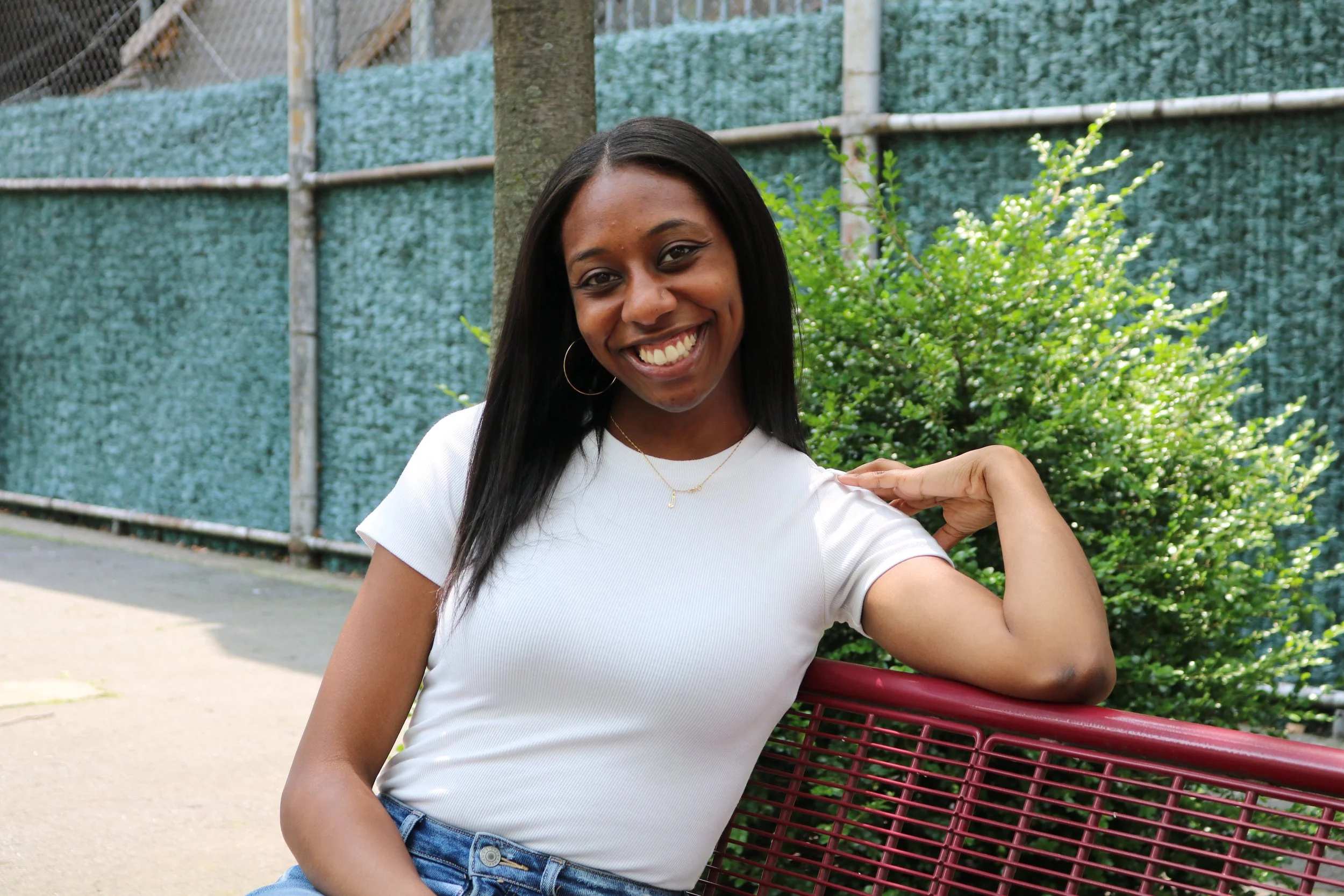
Jasmine Coombs is director of equity and inclusion programs at Bard High School Early College Manhattan and an alumna of the school. Photo courtesy of Jasmine Coombs
A decade after NYC launched its Diversity in Admissions program, demographics have shifted at competitive campuses such as Bard High School Early College Manhattan.
Bard now sets aside half of its seats for students from low-income households. But changing admissions is only the first step toward true integration. The larger question: What is being done to support these students once they’re enrolled?
P.S. Weekly producers Zoe George, a senior at Bard, and Rayleen Laloi, a junior at the Brooklyn Institute for Liberal Arts, explore how the school’s rigorous, accelerated program can be jarring for some. They look at how the state-funded Smart Scholars program provides crucial support for students from underrepresented backgrounds in early college programs.
Bard’s Smart Scholars Program is overseen by Jasmine Coombs, herself a graduate of the sought-after school. She’s now Bard’s director of equity and inclusion programs.
During her senior year in 2014-15, students of color made up 55% of the population. Now, it's 66%.
Coombs discusses her firsthand experience of needing a space where students are not just seen but also heard. That’s what Coombs has built in Room 204 for her students.
P.S. Weekly is a collaboration between Chalkbeat and The Bell. It’s available on major podcast platforms, including Apple Podcasts and Spotify. Reach us at PSWeekly@chalkbeat.org. New episodes drop on Thursdays.
P.S. Weekly is made possible by generous support from The Pinkerton Foundation.
Jasmine: I'm actually just trying to, trying to look at my grade right now and see, like, who's who, you know? I haven't looked at this- We haven't looked at this in a minute ...
Jasmine: pictures still look the same.
Zoe: I know. Let me find mine.
Jasmine: Aw, everybody was so young here. I know. It was so cute.
Zoe: This is PS Weekly. The Sound of the New York City School System
Jasmine: I’m Rayleen Laloi, A junior at the brooklyn institute for liberal arts, or, BILA.
Zoe: I’m Zoe, a senior at Bard High School Early College, and you just heard us looking at my school’s yearbook from 2015. I’m speaking to Jasmine Coombs She's now the director of the Diversity and Equity Initiative at Bard and when she went to Bard from 2011-2015, the school looked pretty different.
Jasmine: Thinking about race and identity- Mm-hmm ... back to, like, large space, like, large gatherings. So, like, we had a town hall. I'm gonna show you a page of it. We had a community day teach-in. Oh. So this was in response to the Trayvon Martin, um, killing, 'cause that happened, I think, at the beginning of my senior year.
Jasmine: My class, it was very not Black at all. But the students, the, my peers who I, like, made friends with, who did not come from the same upbringings as me, still cared about mine and I still cared about theirs.
Jasmine: Um, and I, that made me have, like, a really diverse friend group at Bard that made me learn about, like, different, you know, ways of walking in New York City.
Music
Zoe: This week, I wanted to talk about a change that's happened at my school over the past 10 years. My school, Bard, is an early college high school, which means students do college coursework, and most students graduate from the high school with an associate's degree.
It's small, about 500 students total, and pretty competitive to get into. You have to sit for a special exam and also do an interview and before I was a student, it looked pretty different demographically than it does now. It was a PWI or primarily white institution.
That started to shift a bit when the citywide Diversity and Admissions Program began in 2015
Rayleen: What's the Diversity in Admissions program?
Zoe: Diversity in admissions is a citywide policy that started with just seven schools, and now over 100 schools are a part of it
The program allowed for schools like Bard to set aside a certain percentage of their seats each year for students who are underrepresented.
For example, this might include students who are English language learners or qualify for free or reduced lunch. The aim of the program is to create more socioeconomic and racial diversity at the school.
At Bard, this means 50% of the seats in the admissions process are held for students who are eligible for free or reduced lunch.
Rayleen: So what did Bard look like back then, racially?
Zoe: In the 2014 to 2015 school year, there was no majority, but the school was 45% white. The next largest population was Hispanic students, but they only made up 19%.
And the school was about 17% Asian and 17% Black.
Rayleen: What do the demographics of the school look like?
Zoe: Now the demographics have shifted a little. The white population has decreased to 34%, and the Hispanic population increased to 24%. Asian students now make up 20%, while Black students make up 16%, and other, which makes up 6%.
Zoe: But the more interesting question to me is what is being done to support these students once they're admitted to the school? As a student from what Bard calls a diverse background, it can be hard to excel in this intense college prep environment without the right kind of support.
I see students suffer from failing classes, transferring out, or battling serious imposter syndrome
Rayleen: I can imagine. I'm curious what's being done to support these diversity efforts once the students are enrolled.
Zoe: Well, this is where the Smart Scholars Program comes in.
Rayleen: What's the Smart Scholars Program?
Zoe: The Smart Scholars program at Bard began in September 2010. It automatically enrolls students who come from what Bard calls, quote, "diverse cultures and backgrounds," end quote, and focuses on, quote, "increasing the access to our early college experience for qualified, deserving, and often underrepresented students from across New York City," end quote.
I was enrolled in this program along with about a third of my grade and have found it to be a significant pillar of emotional support in my journey as a Bard student.
Rayleen: What do you think has made it so impactful?
Zoe: Well, in some ways, I think it is as much of a who as it is a what. Jasmine Coombs -who you just heard me talking about the yearbook with at the top of this episode – -she was a smart scholar student like myself back when she was a Bard student from 2011 to 2015. She's a Black woman like me, who has seen this school through these changes, and she has made it her mission to make sure students like me feel supported and heard in an environment where they may not always feel like they belong.
Jasmine, is really committed to making these safe spaces at Bard, or BHSEC as you’ll hear us call it, in her office, room 204, which has become a lounge and meeting space for students in the Smart Scholars program.
I wanted to speak to her about how Bard has changed since she was a student and what supporting students from diverse backgrounds really looks like on the day-to-day.
Music
Zoe: So before you were a guidance counselor, you were once a student at Bard like me.
Jasmine: Mm-hmm.
Jasmine: I started BHSEC in September of 2011.
Zoe: What was Bard like when you went
Jasmine: Oh, man, that's a loaded question, girl.
Jasmine: when I came into BHSEC, um, I was, of course, faced with the club fair, as we all are, in ninth grade. That's like one of the first, like, BHSEC-specific, like, events of the year. And I remember seeing like the Blacks and the Lions, and I remember seeing... I was part of the club called, um, Glamour Girls where we like went to nursing homes and like painted, uh, the ladies'nails. That was a club. That was cute. I saw like the cheer team. Like I saw all these things that I wanted to join. Um, and I felt welcome to join all of them. Like, like don't get me wrong, it was definitely a welcoming community, but it was very apparent from the very first event of the school year that like, okay, this school is not majority me
compared to where I came from.
My middle school waswas basically all Black and Latino in Bushwick back when Bushwick was not the place to be.. But like I said, I felt welcomed. So I didn't feel like it was something that was gonna like make me feel uncomfortable or make me not wanna go to the school.
Like I definitely was like, "I'm in the school. I feel good," from day one.
Zoe: just to clarify, the diversity initiative or like Smart Scholars started when for you?
Jasmine: Scholars started in, in general at BSIC Manhattan in 2011. That's when the programming-
Zoe: that was your what?
Jasmine: grade? That was my first, that's my ninth grade year. But I didn't join it. So, you know, it starts with the summer program. Right. I didn't do that. I don't, I don't think I was invited.
Unclear. Can't really remember that far back, but I definitely joined unofficially in 10th grade, so that's a big thing, a big difference between then and now. You can't really do that. You can't join. You have to be invited to the program.
Zoe: Um, so like talking along the lines of like Bard's goals and like the goal of that program, what is the goal of like Smart
Jasmine: Scholars? Smart Scholars is a state program that connects... It only connects with public schools in the state of New York that offer students a chance to earn college credits. So when the program began, Bard hopped on it- Mm ... because one, they were already doing that, and two, they were thinking about ways to increase the access and the equitable,, access to the program for Black and brown students, low-income students, first-gen students, students with disabilities, anything of a demographic of students that is and has historically been underrepresented within higher education.
So that's the like main goal of Smart Scholars is to make sure that students have access to earning college credits, for free and are doing that,ahead of applying for, for colleges, so basically in high school.
the point of the program is to make sure that students who come from backgrounds that are underrepresented are just given a little extra support to make sure that they're getting it, they're...
to make sure that they're, overcoming any of the obstacles that are in their way f- by chance or, or, you know, for whatever reason. Um, so what that looks like is making sure that our incoming students, even before they, become like actually enrolled students, that we're going out to different areas of New York City and doing the recruitment and going to fairs and making sure that families know about our assessment and making sure that we are doing little things like translating documents into different languages and, and sending email blasts and just making sure that we are recruiting who we need to recruit first so that students have a chance to, , just take the test in general, give themselves a chance there.
And then once students are actually enrolled,they're placed in the program, and then what BHSEC Manhattan does, i.e. me,
Zoe: Is make
Jasmine: Is make sure that those students are comfortable and that they're seen and that they're heard. 'Cause in terms of where I stand as both an alumna and also just someone who really believes in Bard and believes in what the early colleges do for students, um, you can't do anything in high school if you don't feel like you belong.
we all have our moments where we, you know, we're not earning a grade that we like, or we're not, you know, following the trajectory that we were hoping for, and that's kind of where the program would step in and just make sure that the student has what they need to feel adequate enough to get that associate's degree.
Zoe: Were there any forms of support you wish you had access to as a Bard student that didn't exist?
Jasmine: Um, but talking about like that type of support, were there any forms of support you wish you had access to as a Bard student that didn't exist? Hmm. I think... Okay, so I definitely had a me when I was a student. His name is Jeff. Jeff was the second Smart Scholars director, but back then, that's not what the title, what the title was.
Um, but he was definitely my safe space on campus. I actually, I need to speak about him more because he is another reason, um, why I am the way I am with my, with my current programming students because he really showed care in a way that I hadn't experienced, I don't think really in any school that I had been in prior to, to BHSEC on a non-academic level.
he saw things in me, like my mentorship skills and my ability to listen and my ability to like care for people in ways that I hadn't...
Like, no one had ever highlighted for me before in a capacity where he kind of some days made it worth coming to school.
We had like a committee in the Diversity Initiative, and he elected me to be the organizational director because I had those skills of like putting things together and like, and I... Like, no one had ever told me that. I, like, I'd never, I had no idea.
So he was like one of the f- first people on campus that I felt really safe with, and I just kinda stuck with him as my like person, quote, unquote. He actually worked in the same office, the 204. He was my 204 person.But I wish that I had more people like him when I was in high school, and I wish that I had gotten connected to him earlier Because there were, like I said before, there were definitely moments in ninth grade where, like, you feel inadequate, or I felt inadequate.
I felt like, you know, this is a hard school. I'm not used to this. I'm not used to the workload. There were definitely moments where I, like, got grades that I didn't love and had to deal with that with my family, who didn't like it.
Zoe: Very true.
Jasmine: So I,
I think that's, like, one of the biggest things we put a lot of effort admissions-wise into making sure that the student body reflects New York City. I don't think that we do the same for the staff and the faculty. Mm. I think that there's definitely a lacking in diversity amongst the faculty.
Not even racial diversity, I think just diversity in experience- Oh ... of like a cultural diversity. Um, for example, yesterday I was ha-handling a student who, um, you know, started crying with a teacher because the teacher was just, like, not really reading the room and, like, wanted to talk when the student didn't.
Um, and the guidance counselor called me actually and said, "Hey, I, I know you know the student. Can you come up and can you talk with us? 'Cause I think that you'll make her feel more comfortable." Mm. I'm always gonna say yes, so I came right up. Um, and the student is a Black student, so the [00:13:00] student basically expressed, you
know- w-voicing that she wanted some space, and the teacher wasn't really respecting that.
And she made a comment and she said, "People always think that I'm, I'm mad or I'm mean or something." And in my mind, initially, I was like, I deal with that all the time. As a Black woman, people always think that I'm mad or they always think that I have an attitude or they... And I'm just straight face. I'm just thinking.
Mm-hmm. Right? But the guidance counselor didn't really pick up on that, and it's like little things like that that I, I know could be addressed- Yeah ... if you just put more effort into making the staff more culturally aware- Yeah ... of things that certain students go through versus other
Zoe: Yeah, 'cause at the end of the day, the guidance department is not diverse. At the end of the day- Yeah ... the Bard faculty is
Jasmine: It's not representative of New York City the way that our student body
Zoe: or even our students is, and we just started getting diverse. It's so funny that- Yeah ... we're in the most diversity in the, like, country and Our, the school system or our districts are the most segregated- Yeah
I've ever
Jasmine: Yep. Yeah, the diversity in BHSEC is definitely a recent, uh,
Zoe: Yeah.
Jasmine:I wanna say I can think of 10 to 15 students off the top of my head from my graduating class that were Black or Latino.
Zoe: Mm.
Jasmine: Um,
the h- the grades below me, I wanna say, started getting better
Zoe: Yeah ... because,
Jasmine: the, you know, they just made some shifts in admissions. But I wanna say the most recent graduating class,
Zoe: Oh, last year
Jasmine: was like the most diverse that we've ever had. I do think it is better more recently. When I was a student, definitely was not. Definitely was not, but it was just something that we just kinda dealt with. Um, we stuck together. We made sure that we understood from, uh, like in our friend group, like this is what we're doing. We're, we're gonna go to class.
We're gonna study together in this free period. We're gonna do this, we're gonna do that, and not even make it a big deal. Um, but definitely as I graduated and like went into college and finished college, um, I would always think back to my BHSEC time, um, and think about the lack of diversity and just kinda channel that into my now, into my why now.
Like, why I do everything, making sure that my students are served and pursuing this program to the best of their ability because it does make the difference. It does break that cycle for them
Zoe: PS Weekly will be back after a quick break
Speaking in First Draft Trailer
Zoe: Yeah. Um, soadding on to that,transitional period of like the diversity shifting.did wanna know, um, has there been any like challenges or kinda like growing pains about that program and kinda like what those are
Jasmine: The inequities in, in public school education definitely don't start in high school. I work with a lot of eighth graders during the fall.
Like, I go to open houses, I go to fairs, I go and do off-site tests, and my biggest heartbreak is when I go and I say, "Bard offers free college credits." Like, we do this, we do that, and as soon as I say assessment, they're turned
Zoe: They get scared?
Jasmine: done. They're done with me.
Zoe: also, yeah.
Jasmine: I think it's, I think it's a mixture.
I don't think it's scared. I
Zoe: No, I think they just don't wanna
Jasmine: they just don't wanna do it ... they don't wanna do it, and I think that that's a response to the education that they've been receiving up until that point. Like, if, if you're a, middle schooler who doesn't like school, there's no way you're gonna like having to take a test to get in.
Like, there's, there's no way. Those two things are not gonna connect. And it really does break my heart because there's nothing that I can do about that.I can't go back three, four, four years in the past and change the way that they're learning.
I can't go back and change... Like, maybe they had a really tough year in, in fifth grade or sixth grade. It starts early. It starts early. It doesn't start in high school. So I think that admissions processes across high schools in New York City, like we just deal with so much that we, that are out of, that's out of our control. Um, and I, like I work with, uh, a really amazing admissions director, shout out to Sylvie,We think very similarly about the ways that we're, we can try and adjust the way that eighth graders think about admissions and just like working around, around that, that roadblock sometimes. And we always come back to the same point. Like, it, like if-
Zoe: can only do so
Jasmine: can only do so much. So we just kinda shift and make sure that we're staying really connected with middle schools in certain areas
Zoe: Yeah.
JasmineI think another thing that's very BHSEC specific to me is accepting, like, a student who's super excited, who, like, really is excited about high school, excited about being a BHSEC student, and then they have their first semester and they completely bomb it and it ruins them, and I think that's another heartbreak that I have because BHSEC has its ways of moving really fast- Yeah
Jasmine: and leaving behind students who can't, can't get it that fast.
and that turns that bright-eyed student into someone who is almost lights are off inside. You know what I mean? And that's something that, like, that's the opposite of what we wanna do, and I don't think that we do enough to kind of slow down and, and get those students back on track.
That's another thing that I did within the Smart Scholars program I think a lot of people, especially in the Smart Scholars program, very zero in on themselves and it's like, ah, nobody else looks like they're struggling. Nobody else is asking for help, so I'm the failure because I have to do it.We have students who come in who are top of their class in middle school, and then they get their first D and they're like, "Oh, my God.
Zoe: do this."
Jasmine: I can't do this." And then no one really slows it down and, like, talks to them.it kinda falls through the cracks of having that conversation with them where it's like, "Okay, like, this is not a school where It's gonna come easy to everybody." Right. Like, you really have to just, like, figure out what's gonna work best for you. Chalk that D up to, "I had a moment," and
Zoe: Then move on ... move forward. Like, yeah. You can't, like, carry the stress from that. it's a, it's a common experience. Mm-hmm. So I think more talking and more communicating about it and more open spaces to be like, "Yeah, this is gonna happen.
Like, you're gonna get a bad grade in Bard." Get a bad grade. "It's gonna be okay." ... I'm a big believer in what the early colleges can do. I'm a product of it. Like, love it hands down. But I do think that there are so many different moving parts that it's so easy for little things like this that we're talking about right now to fall through the cracks.
Zoe: where do you hope to see the program go in the future?
Jasmine: It's very hard to function in a school like BSAC where everything is academic when you weren't raised in that kind of environment or household, right?
So I just hope that the program continues to support students in their own mindsets towards literally embodying an early college mindset, right? Understanding that once you get into a school like Bard, one, you should be very proud, 'cause it's very hard to get into a Bard High School nowadays. Very accomplishing.
But two, stick with that. Hold onto it. And I, I'm hoping that that even ex- extends outside of the Smart Scholars Program, that it's just true for any student coming into our school is that once you're in, you're in, and you're d accomplishing amazing things, and you should be very proud of yourself no matter what you're, you know, ending up with.
Zoe: I think the shift for me was just kinda like you're as deserving as- Yeah ... and this as anybody else, and you're gonna need something, and that's natural, so you need to know to ask things when you need them. I did wanna also ask,I see s- the Smart Scholars program as a safe space, and I see 204 as a safe space. Yeah. So I was wondering if, how would you define a safe space and what that kinda looks like?.
Jasmine: I think a safe space is a space where someone can be 100% their truest self without turning off anything or hiding anything about themselves, where they can, like, fully enter, like they belong, like they're part of something.
'Cause we have like the library, we have the fourth floor hallway, we have the caf. None of those spaces operate in the way that 204
Zoe: Fair.
Jasmine: The
Smart Scholars program needs a space on campus because if we're trying to support students who are underserved in any way, they therefore need a space to feel comfortable going to and feel comfortable existing in when by any chance there is another space on campus where they don't feel comfortable.
Like, that's the whole point of the program, is to make sure that we are creating space, in a larger space, where they might have a chance where they're not feeling 100%, where they can then go to and kinda bridge that for themselves
Zoe: and I think that's pretty selfless 'cause 204 is technically your
Jasmine: It is. I
Zoe: to me how it could be a classroom earlier.
Jasmine: to me how it could be classroom or it could be- It could.
Zoe: be one. And so I think it's pretty selfless that you let 204 be more of a student
let it become one, it could definitely be So I think it's pretty selfless that you let 204 be more of a student lounge.
Jasmine : Well, I know how important it is to have a space, a- again, as a past student, to go and, and, and have your person be there or have a person who you really connect with, your trusted adult on campus, um, just from experience.
So I would never...
Zoe: quiet now"-
"because it is my
office
Jasmine: I say sometimes, like, "It's too loud," or like, "Quiet down"- ... 'cause it is my office and I have to get work done, but I, I really do believe in offering a space on, specific at BHSEC Manhattan, for my students, my Smart Scholar students to come to and to really decompress. Um, because I know how stressful it is in those classes.
I know how stressful it is to like be cold called on a day where you're just not feeling it or, to not come to class prepared or to like have just finished a test where you thought that you were gonna do well and then you finish and you were like, "Mm, that didn't go too well." So I know how, how it feels to like need a space.
I think that the safety in my eyes has a person connected to it, and I'm happy to hear that that's me for you. Like it can't just be a space without someone kind of making it intentional, if that makes sense.
Zoe: Do you think that the DOE has a duty or a role enforcing, like, these types of spaces?
Or, like-
Jasmine: I think, um, I mean, you made a point earlier about, um, being one of the most diverse cities, but then being the most, uh, one of the most segregated in public school education. And I think students need to feel comfortable to go to school. Yeah. Period. Like, that just has to be. If someone isn't comfortable going to school for any reason, they're not going to go.
That's human nature. Yeah. Right? We're gonna shy away from things that we are not feeling welcome to, and I think one of the easiest ways to kind of level that playing field is to take the academics out of it and just make a safe space. Make a space for students who, for students who can go to that space with their group and feel comfortable.
So I do think the d- the DOE should, um, kinda put a little bit more, focus on providing safe spaces that are not connected to academia in Like, we don't really have this problem at BC Manhattan of, like, absenteeism or students just, like, not showing up, but I definitely know that that's a problem in the New York City public school system.
And I think that that could be a nice or maybe an effective way to get more kids in the door for, for, , people who are dealing with things behind the scenes that are not allowing them to kind of get themselves into schools'
Zoe: Yeah. And not to put anybody on blast,
Jasmine: we necessarily we
Zoe: I don't think it'd necessarily be a problem with absenteeism, but I think we have a problem with if students don't like a class or they don't feel comfortable in a class, they won't go to that
Jasmine: Oh,
I know, girl. Yeah. I was a student once
Zoe: to,
Jasmine: know exactly how
Zoe: they will not go.
Um-
Jasmine: Yeah, I had, I have my own experiences with that.I had a teacher year one. Uh, in that class I was the only Black girl, It was,I think we were reading Soul, The Souls of Black Folk, and that was tough. Wow. I think. It was m- I think it was year one
Zoe: That sounds like year two.
Jasmine: Maybe it was year two. It was definitely the
Zoe: a summer program.
Jasmine: Um, and I felt uncomfortable, and I didn't know how to voice it, and I stopped going for a certain period of time. I think it was like first period, and I would just,
like come
Zoe: late.
Ooh. Yeah, it was
Jasmine: tough. So I definitely... Like, I, I,
Zoe: year one ...
Jasmine: I understand what that like feels
Zoe: Yeah.
Jasmine: If someone is uncomfortable with something, our natural response is to shy away from it. Um, and it's true. It's true in BHSEC. That's definitely true.
If you're not connecting with the person who's teaching you, if you're not con- connected with the topic, if you're not connected with any part of it, your natural response is gonna be to shy away from it. Um, and my response to that whenever I have a... If I'm working with a scholar who's dealing with that, is one, this is the same thing that you might experience in college, so let's just try and overcome this now.
And then two, the teacher's job is to help you become more connected with it or help you become more, uh, interested in it, and if you're not giving them a chance to teach you how to do that or to, like, maybe give them feedback on how to do that, then they can't read your mind.
Zoe: I was gonna ask, is there anything we haven't touched on that you wanted to add?
Jasmine: wanted to add? Um, I think I'm so happy to just, like, to offer the safe space on campus, and that it's, that it is serving the community that I want it to serve.
Because being a BHSEC student is hard. Not impossible, but it definitely is hard, and I'm happy to just be someone on campus to, to kind of bridge that for a lot of my
Zoe: Yeah.
Well, I always sing your praises, Miss BSA leader. Thank you. Miss Smart Scholars leader.
Jasmine: my best.
Zoe: Scholars
Jasmine: I gotta give it back to the community, you
Zoe: Um, Miss BHSEC alum. Um, Miss NYU graduate. Yes. Finally. Miss Bilingual speaker. And yeah, so thank you so much for joining me today.
Jasmine: me. This me. This is so fun.
Zoe: That interview gave me a lot to think about. Issues like this about safe spaces in schools are complex, and there's multiple levels of barriers you have to break to get the progress you want.
Rayleen: Yeah, I agree. Safe spaces aren't just about the literal space itself.
Proud. You got this, girl. Room 204 is nothing without a Jasmine in it.
Rayleeen: For me, a safe space is somewhere where you can just be yourself. Like, you don't have to be a version of yourself or put on a mask. You can just be who you are and feel comfortable doing that, not feeling like you're, different or that you're being someone that you're not, basically
Zoe: I would agree. After listening to this interview, I definitely co-sign the not having to pretend to be someone else. I think there's also an element of, like I you don't have to reduce yourself to be easier to take or palatable. This is especially coming from a student of color lens.
Like, you don't have to reduce yourself to be palatable, or your ideas or your beliefs to be, um, easier to handle towards other students or just other people in general. And I also think that, yeah, you don't have to put on a mask, but you can also know that not just you don't have to put on a mask and you can be yourself, but know that you can be at least understood on some sort of level. There's like a collective kinda like bond there in a safe space, and just knowing that you're not just being seen, you're also being heard.
MUSIC
Rayleen: This is our last episode of PS Weekly for the season, and as a fun little treat, we're bringing you an end of the school year Easter egg, produced by PS Weekly reporter Roberto Bailey.
Roberto: What was your favorite moment of the school year?
Ermione: my favorite moment from the school year was the first week of December when I found out that I was both a Quest Bridge finalist and a Posse finalist, because I never thought, like, I could achieve getting two national scholarships.
Jasper: My favorite memory, I think there's, like, one game where, like, the game was so close, so, like, everyone in the stadium, 'cause our team isn't that great, but everyone in the stadium was all standing up 'cause they actually went to overtime, and it was versus a good team, and I've seen my friends hit some crazy shots.
Rayleen: My favorite memory from the school year, it's gonna sound kinda crazy, but like when it was snowing and the buses were like not coming, so we had to walk from like basically the Brooklyn Navy Yard all the way to Grand Army Plaza with my friends 'cause it was just nice.
Like, I feel like we shared our pain, and it was just a really good time.
Roberto: What is summer in New York to you?
Katelyn: To me, summer in New York, but I'm from Queens. You know, Queens got the culture. Queens got the money, as they say., it's like smelling all the different, foods and, the fruit vendors and like, you know, the guy like doing like jerk chicken on the street, but then like you have empanadas on the next street. You know, like all the different like food smells like filling your nose,
Ermione: Okay, so you know how they pop the caps off the fire hydrants- Mm-hmm ... and the water just gushing? The sound of like gushing water.
Ermione: Um, I would also say like the softie, the ice cream truck and mind you, you could hear it from a mile away,
Jasper: Definitely free Wednesdays at the Bronx Zoo. Like if you know, you know. Just the exhibits just they shine a little, a lot brighter that day. The community there and everyone just coming out to enjoy the summer, it's a great experience
Ermione: I would say just hearing, like, the cars bumping their music as they go by. Like, I just love hearing all the different music that people play, you know, like the Caribbean music.
Vybz Kartel. You just know it's summer when Vybz Kartel starts playing. That's what New York City summer is to me,
Zoe: : PS Weekly is a collaboration between The Bell and Chalkbeat, made possible by generous support from the Pinkerton Foundation. Producers this episode were me, Zoe George. And me, Rayleen Laloi
Zoe Our senior producer for this show is Maria Robins-Somerville and our technical director is Jake Loomis.
Rayleen: Our executive editors are Amy Zimmer and Taylor McGraw.
Zoe: Additional production and reporting support was provided by Mira Gordon, Sabrina DuQuesnay , Zana Halili, Katelyn Melville, and our friends at Chalkbeat.
Rayleen: Music is from APM, and the jingle you heard at the beginning of the episode was created by the one and only Erica Huang. Thanks so much for listening, and see you next time.